





Air Quality Monitoring for Cities - SODAQ
SODAQ's Air Quality Monitoring solution empowers local governments and citizens with real‑time, hyperlocal pollution data. By distributing portable SODAQ AIR sensors throughout the city, urban leaders gain actionable insights to improve public health, inform policy, and achieve clean air goals together with the community.
By: SODAQ
Last Updated: October 21, 2026
Availability by Region:
WorldwideAir Quality Monitoring for Cities - SODAQ
SODAQ's Air Quality Monitoring solution empowers local governments and citizens with real‑time, hyperlocal pollution data. By distributing portable SODAQ AIR sensors throughout the city, urban leaders gain actionable insights to improve public health, inform policy, and achieve clean air goals together with the community.
Monitor Air Pollution in Your City
Conventional air quality monitoring systems are often sparse, expensive, and unable to capture the highly variable pollution conditions experienced across urban neighborhoods. This leaves city leaders blind to localized air quality issues where people live, work, and play, making data‑driven planning difficult and limiting the effectiveness of clean air policies. Without granular, real‑time data, communities struggle to identify pollution hotspots, prioritize interventions, or engage residents in environmental action.
SODAQ's Air Quality Monitoring solution solves these challenges by enabling wide‑scale, community‑driven air quality monitoring using portable, IoT‑enabled sensors. Municipalities, smart city coordinators, and local governments can distribute devices in bulk to residents, schools, businesses, and high‑traffic areas to build a highly granular network of environmental data points across the city.
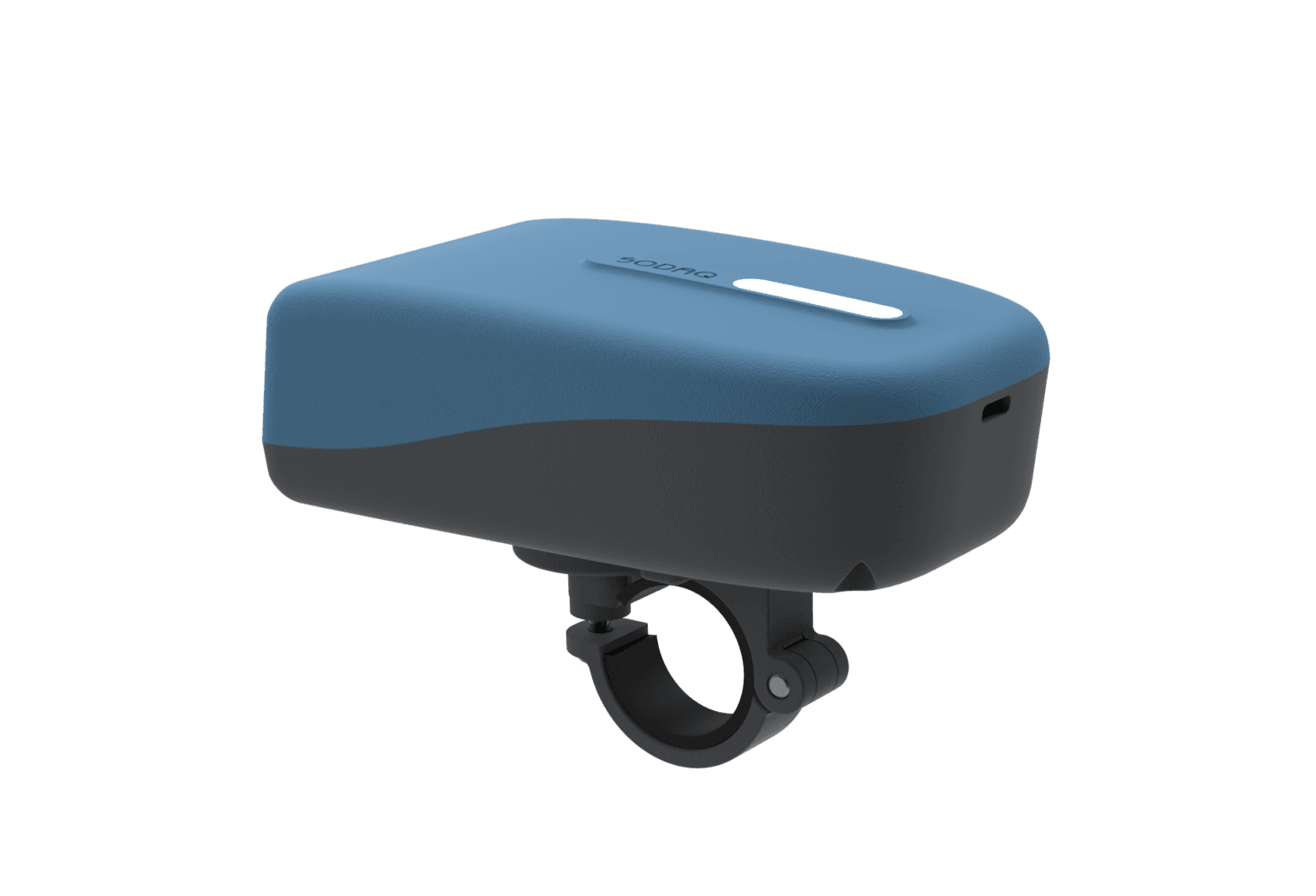
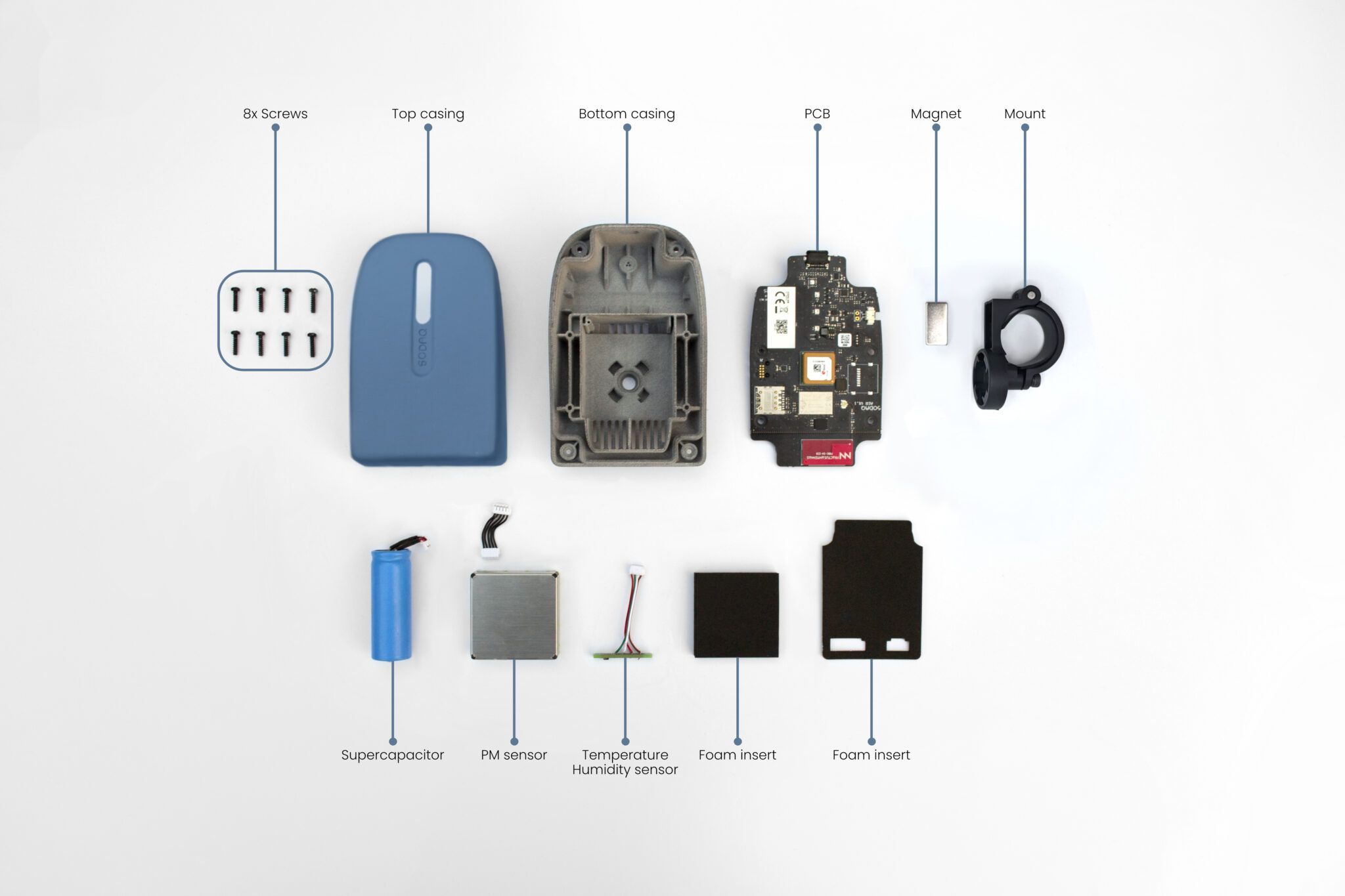
Each SODAQ AIR device measures key air quality metrics — including PM1, PM2.5, and PM10 particulate matter — alongside temperature and humidity conditions that influence pollution levels. The sensors also include smart GPS tracking and motion detection, meaning data is recorded “in motion” during walking, cycling, or daily commutes and automatically pauses when speeds exceed safe recording thresholds (e.g., car or train travel).
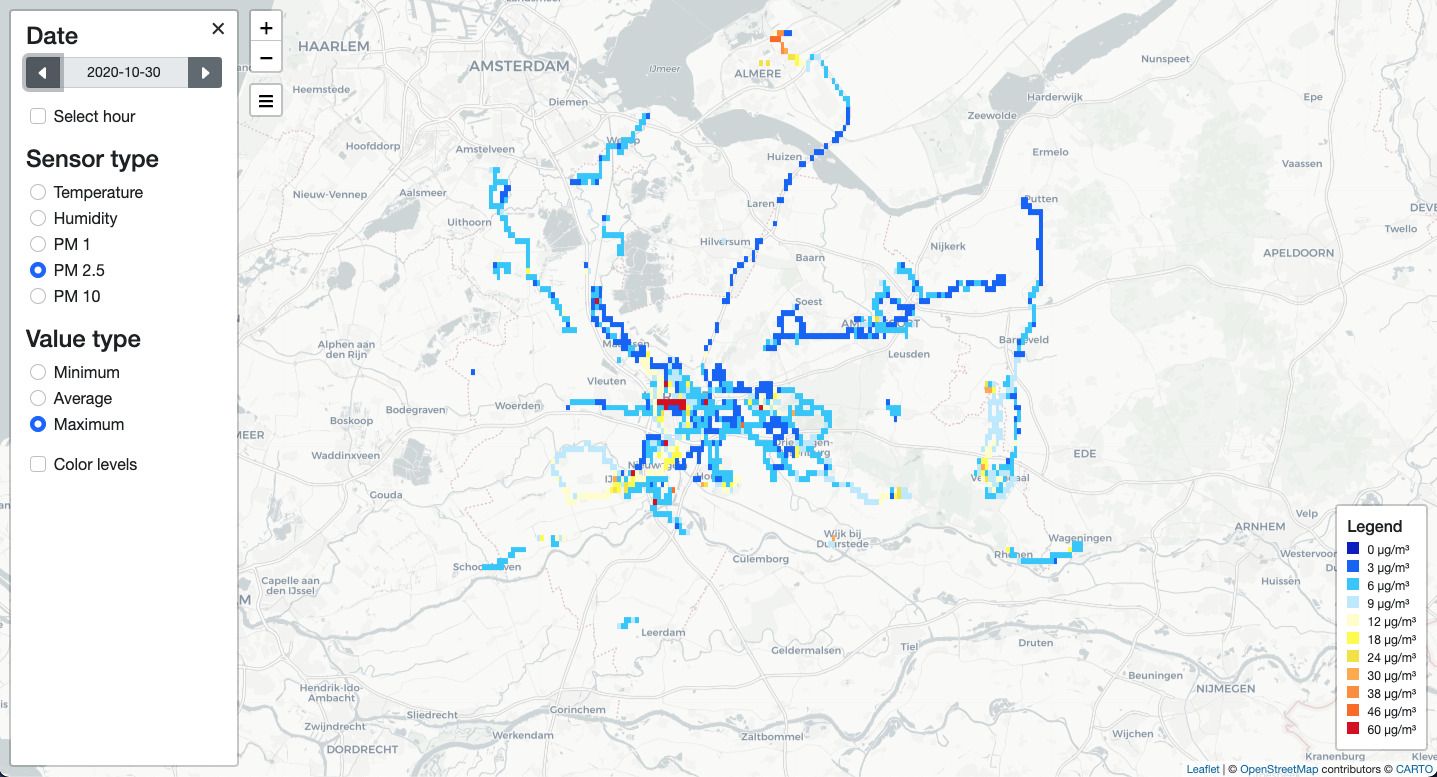
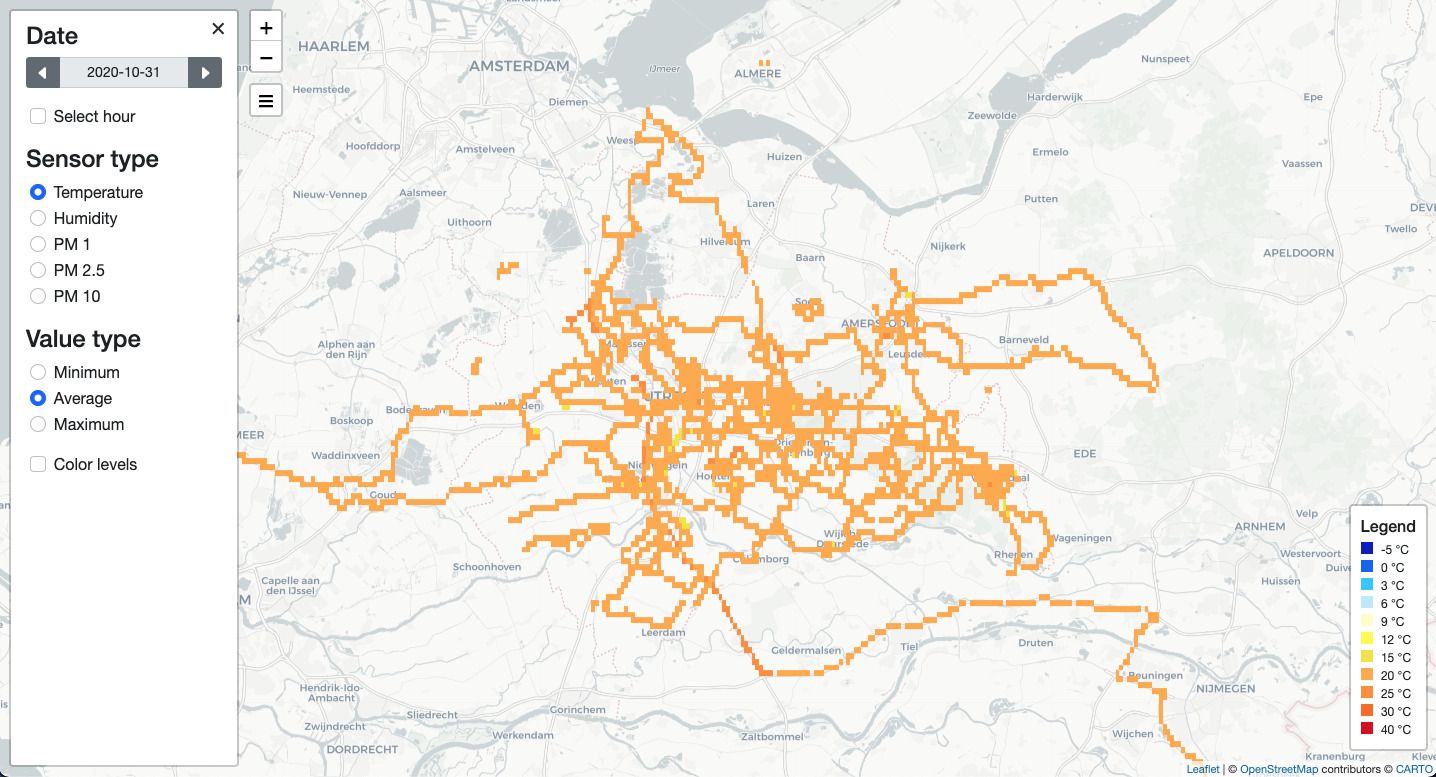
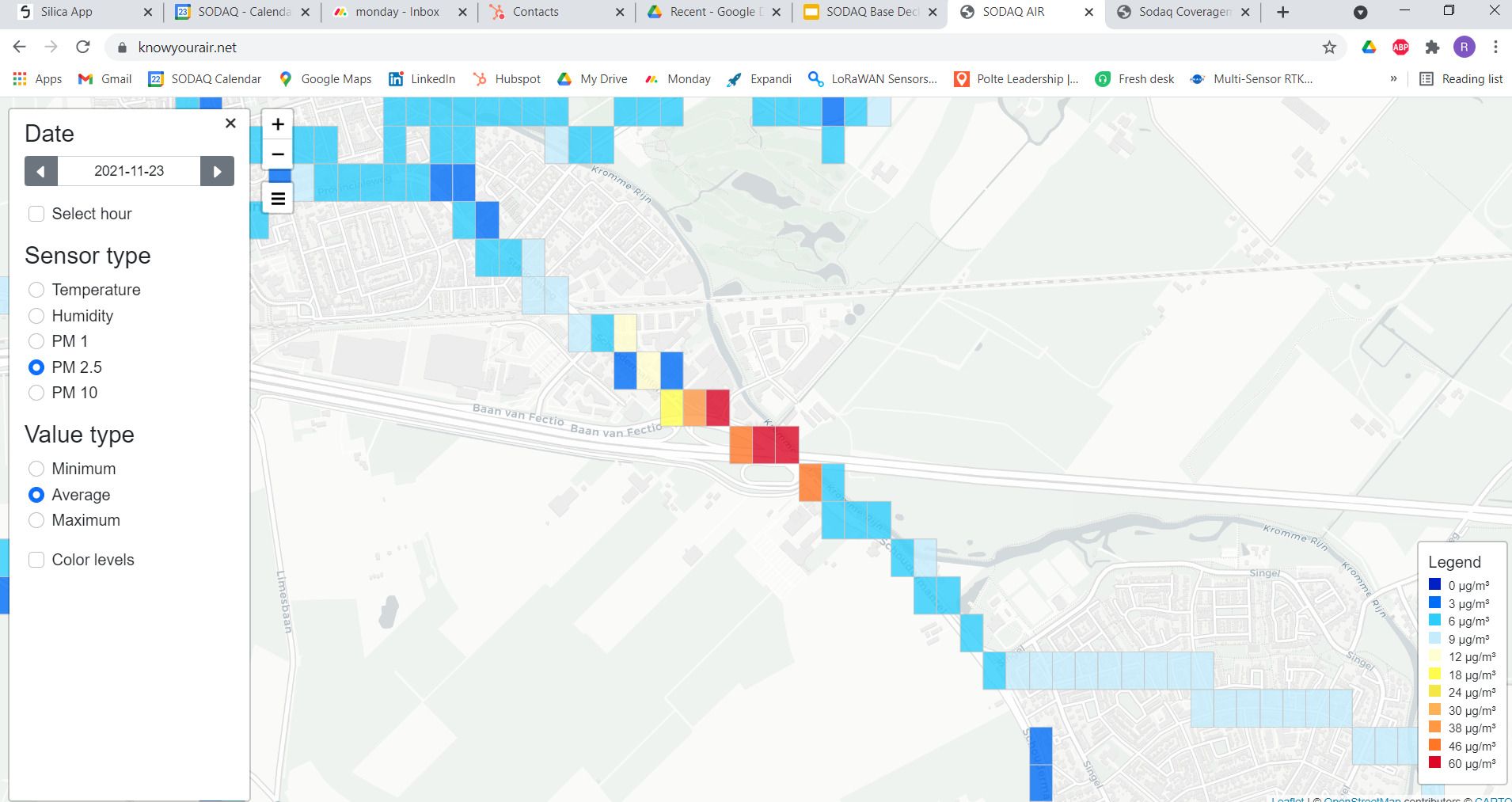
Collected data is uploaded to the Know Your AIR global map, where it’s aggregated in 100×100 meter grids on an hourly basis. This open‑data approach preserves individual anonymity while delivering a comprehensive, citywide picture of air quality. City planners and environmental teams can use this dataset to pinpoint local pollution sources, monitor trends, and implement targeted infrastructure or policy changes — such as traffic rerouting, green buffer zones, or industrial emissions controls.
Beyond governance, the solution fosters community engagement by giving residents firsthand insight into air quality in their own neighborhoods and during their daily activities, making clean air strategies a collective effort.
Benefits

Comprehensive Sensor Technology
Advanced environmental sensors provide meaningful insight into airborne particles and atmospheric conditions by measuring PM1, PM2.5, PM10, temperature, and humidity — enabling a deep understanding of how weather and environmental factors affect urban air quality.
Smart GPS Movement Tracking
Built‑in GPS tracks where air quality readings were taken, helping map pollution exposure along routes people regularly use — providing localized, personalized data that supports targeted action.
Real‑Time, Community‑Driven Engagement
LED indicators and motion‑activated recording make the device easy to use, while bulk distribution and global data sharing raise public awareness and allow citizens to participate in the city’s environmental health efforts.
About SODAQ
SODAQ specializes in tailormade low-power IoT solutions for enterprise-level deployments. Our mission is to tackle global supply chain challenges head on. With over a decade of experience in low-power technology and renewable energy, we engineer impactful tracking solutions for intricate supply chain needs.
Company Size
11-50
Founded
2012
Locations
Hilversum, Netherlands


